
Description
Bare Eyed Cockatoo
Bare Eyed Cockatoo belongs to the Cacatuidae family and is one of Australia’s most common and beloved parrots. Endemic to the mainland and Tasmania, these birds thrive in a variety of habitats from arid deserts to urban areas. Their scientific name, Cacatua sanguinea, refers to their “bloody” or pink eye rings. Bare Eyed Cockatoos are highly adaptable and social, forming large flocks in the wild and becoming popular pets due to their intelligence and ease of care. They’ve been introduced to other regions, like New Zealand, where they have become invasive. In captivity, they are prized for their gentle temperament and ability to bond closely with owners.
Physical Appearance
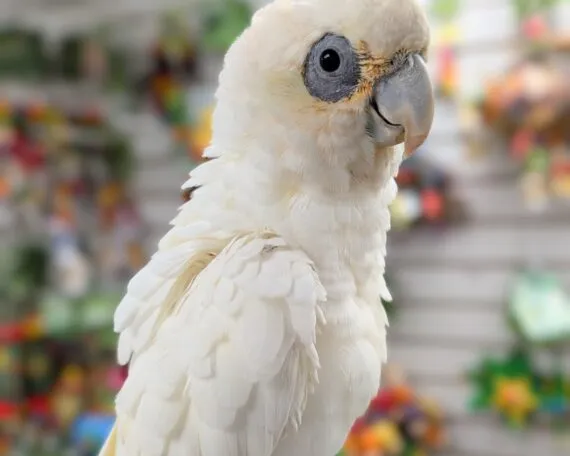
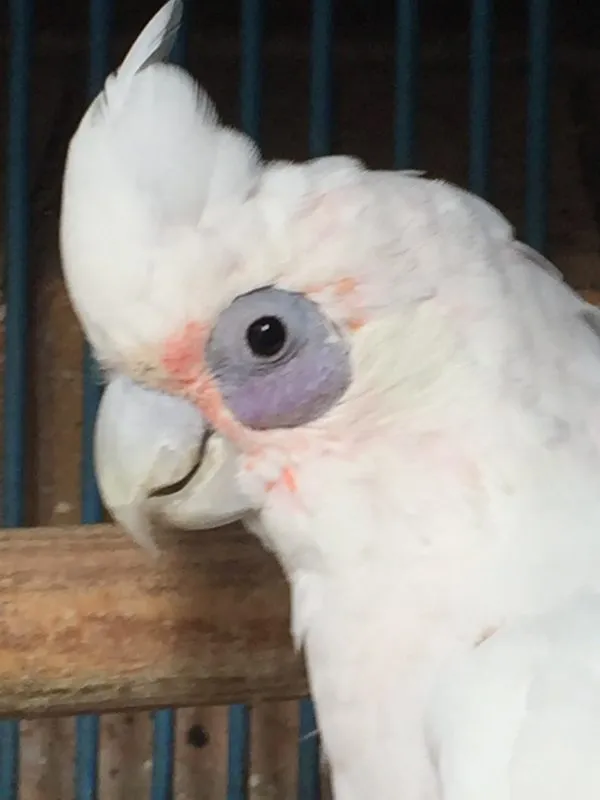
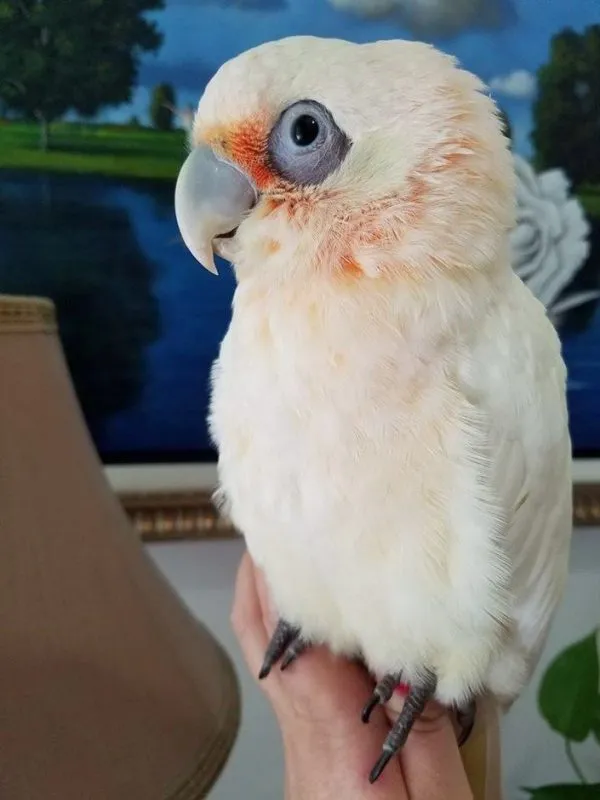
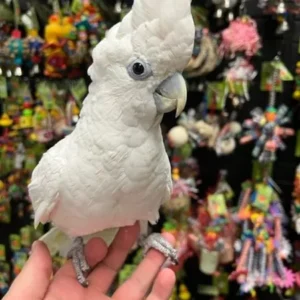
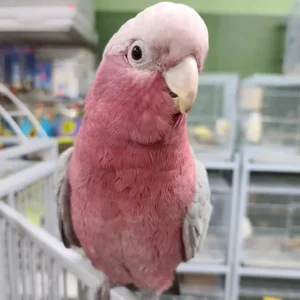
Measuring 14-16 inches (35-40 cm) in length and weighing 8-14 ounces (225-400 grams), the Bare Eyed Cockatoo is a medium-sized bird with a compact, elegant build. Its body is covered in pure white feathers, with a subtle yellowish undertone on the underwing and tail. The most distinctive feature is the bare, bluish-white skin around the eyes that flushes pink when excited, giving them their name. The beak is slender and curved for foraging, and the eyes are dark with a pale eye ring. Males and females look similar, though males may have a slightly larger head. Juveniles have a smaller crest and duller plumage that develops into the adult’s brilliance. This colorful appearance makes them visually stunning, often seen in pairs or flocks displaying their crests.
Natural Habitat and Behavior in the Wild
In Australia’s diverse landscapes, from open woodlands to grasslands, Bare Eyed Cockatoos inhabit areas with access to water and food. They are diurnal and gregarious, forming flocks of hundreds that forage and roost together. Their diet includes seeds, grains, fruits, and insects, with a particular fondness for grass seeds and crops. In the wild, they play a role in seed dispersal and pest control.
Wild behaviors include acrobatic flights, loud chattering calls, and social interactions. They are monogamous, nesting in tree hollows where females lay 3-5 eggs. Due to their adaptability, Bare Eyed Cockatoos are not endangered, but they face threats from habitat loss and competition. Their playful nature in the wild, such as hanging upside down or playing with objects, translates well to captivity.
Why Choose a Bare Eyed Cockatoo as a Pet?
Bare Eyed Cockatoos are excellent for owners wanting a sociable, trainable bird. They offer:
- Affectionate and Social: They bond deeply, enjoying cuddles and interaction.
- Intelligent and Vocal: They learn tricks and mimic sounds, with a range of calls.
- Playful and Energetic: Their clown-like antics keep homes lively.
- Compact and Long-Lived: Suitable for various spaces, with a 40-60 year lifespan.
They require attention to prevent boredom, but their gentle nature makes them suitable for families.
Setting Up the Perfect Habitat for Your Bare Eyed Cockatoo
A spacious cage—at least 2x2x4 feet—is ideal.
Cage Essentials
- Perches and Toys: Varied perches and toys for stimulation.
- Food and Water Dishes: Stable bowls.
- Lighting and Temperature: UVB lighting and 65-80°F (18-27°C).
- Substrate and Cleaning: Paper and regular cleaning.
Allow daily out-of-cage time.
Diet and Nutrition for Bare Eyed Cockatoos
A balanced diet supports health.
Recommended Foods
- Pellets: 60-80% of diet.
- Fresh Produce: Fruits and vegetables daily.
- Seeds and Nuts: Limited treats.
- Supplements: Calcium and proteins.
Feed twice daily with fresh water.
Health and Common Issues
Bare Eyed Cockatoos are hardy but need care.
Common Health Concerns
- Feather Plucking: Address with enrichment.
- Respiratory Issues: Avoid drafts.
- Obesity: Monitor intake.
- Parasites: Vet checks.
Annual vet visits are recommended.
Training and Socialization
They respond well to positive training.
Basic Training Tips
- Commands: Teach “step up.”
- Tricks: Encourage mimicry.
- Socialization: Gradual introductions.
Build trust through interaction.
Breeding Bare Eyed Cockatoos
Breeding requires mature pairs. Provide nesting boxes. Consult experts.
Conclusion: Welcoming the Bare Eyed Cockatoo
The Bare Eyed Cockatoo is a charming bird that brings joy and color to homes. With its pink eye rings, it’s a rewarding pet for dedicated owners. Prioritize care for a happy life. If you’re interested, research and prepare for this delightful parrot.
Reviews
There are no reviews yet.