
Description
Cockatoo Black Palm
Cockatoo Black Palm belongs to the Cacatuidae family and is the largest cockatoo species, often called the Goliath Cockatoo due to its imposing size. Endemic to the tropical rainforests of New Guinea, the Aru Islands, and parts of Indonesia, these birds are adapted to a life in dense, humid environments. Their scientific name, Probosciger aterrimus, translates to “very black beak,” highlighting their distinctive features. Cockatoo Black Palm are highly intelligent and vocal, with behaviors that include tool use and complex vocalizations. In the wild, they are elusive and rarely seen, adding to their mystique.
Physical Appearance
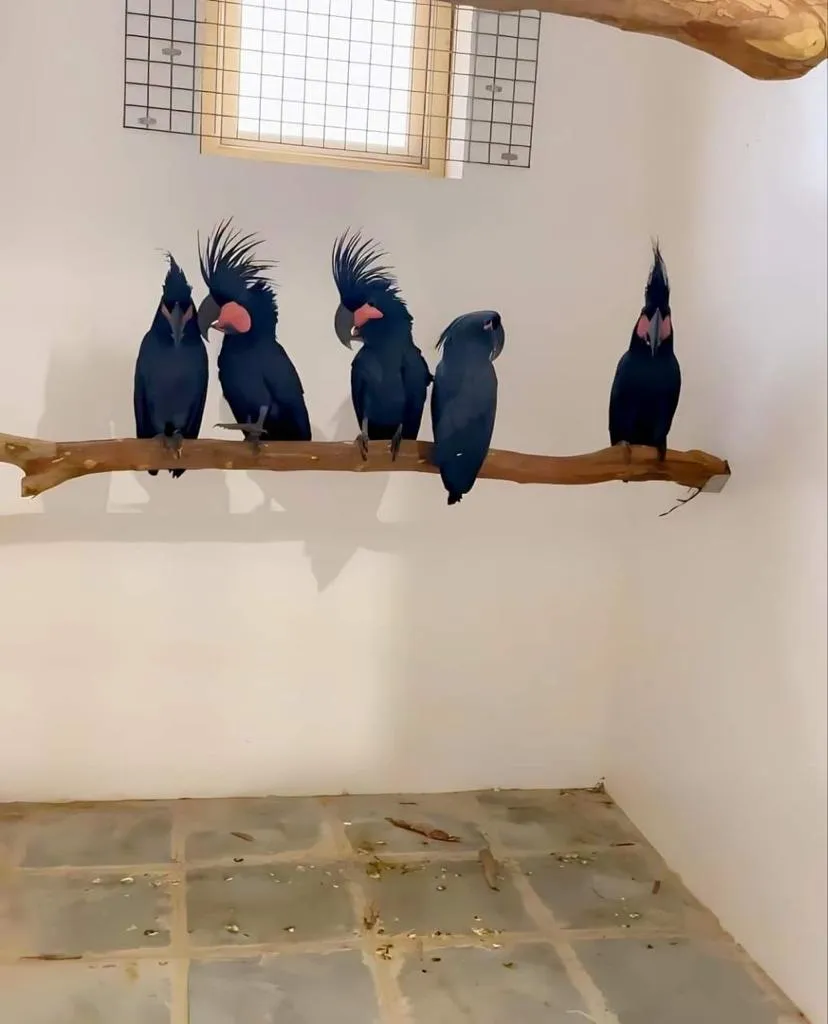
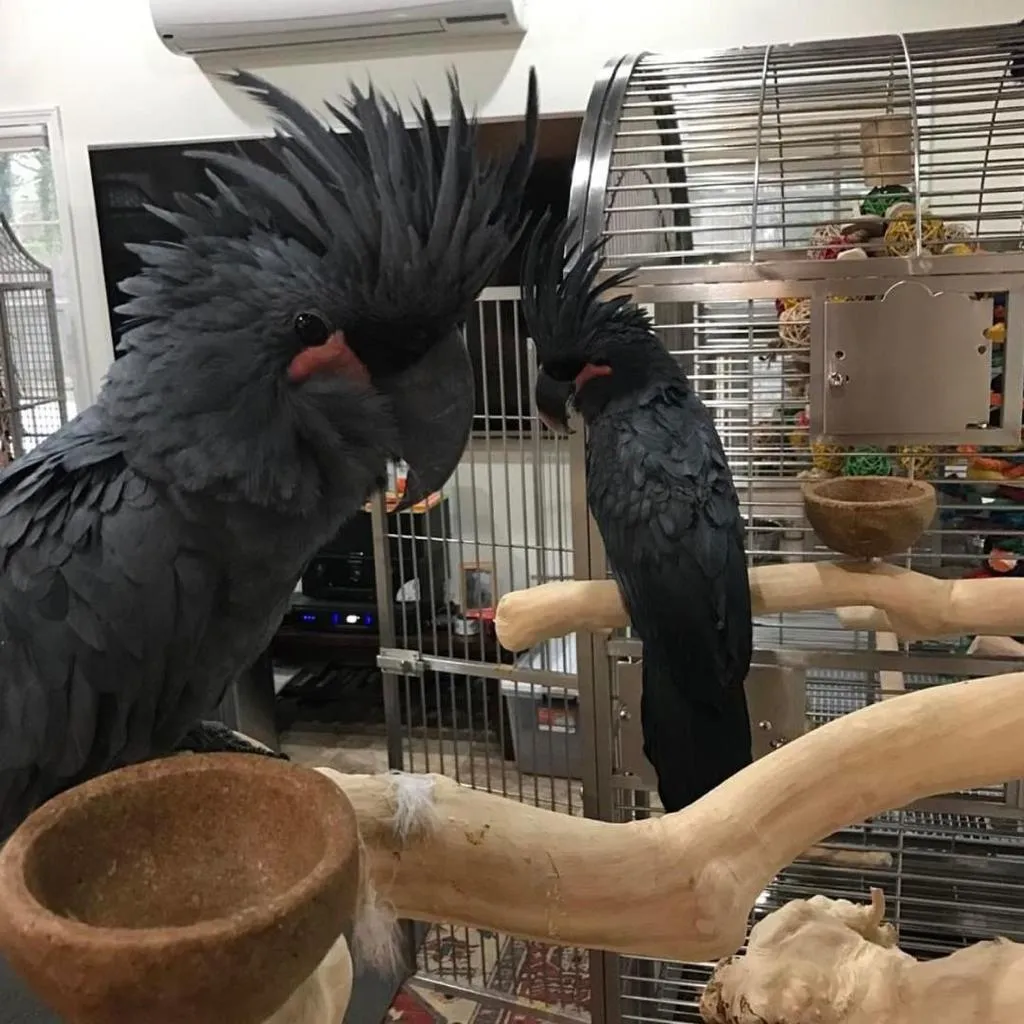
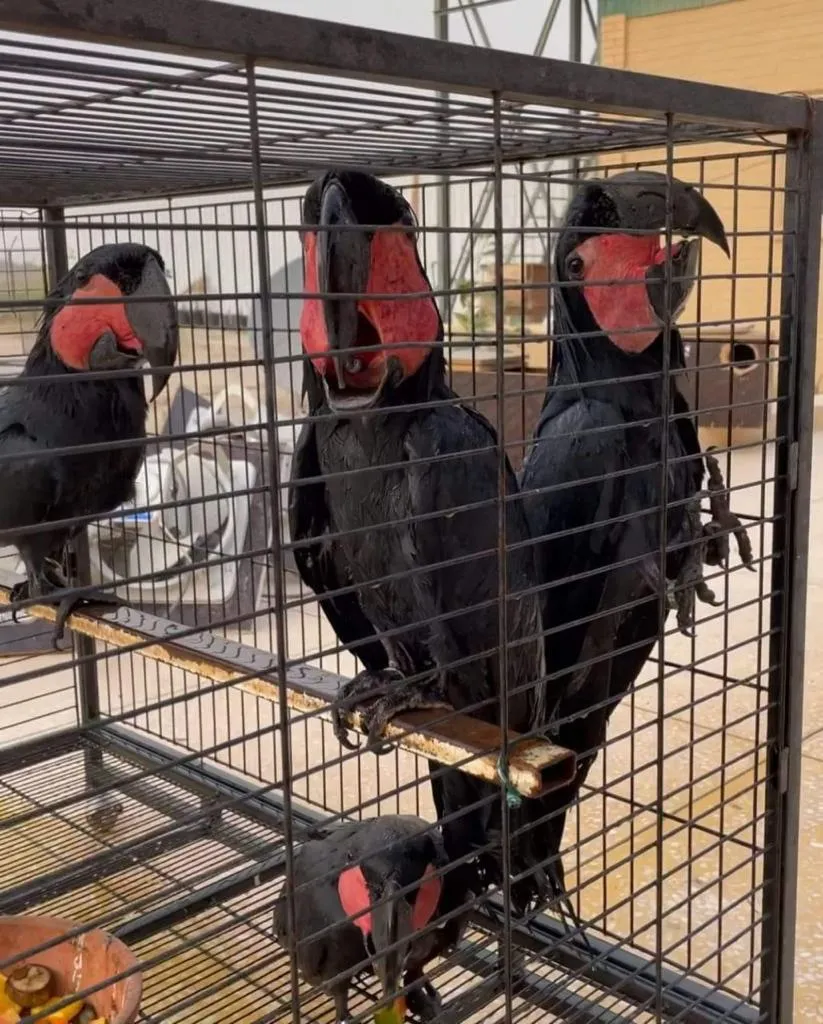
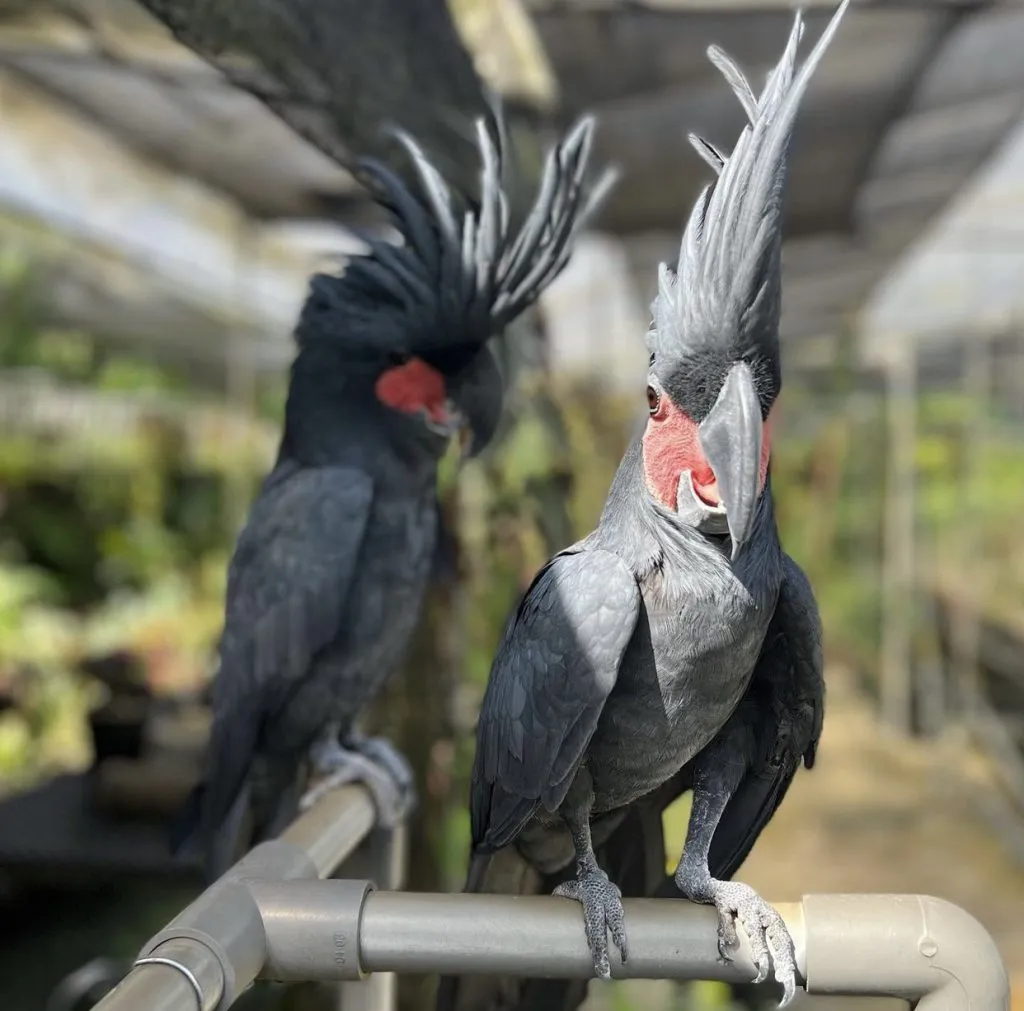
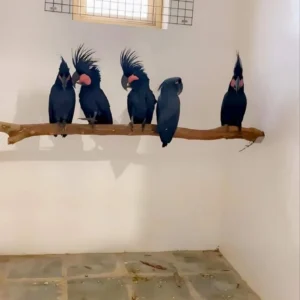
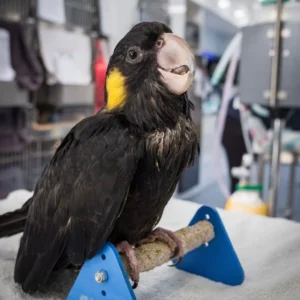
Measuring 22-24 inches (55-61 cm) in length and weighing 2-2.5 pounds (900-1,130 grams), the Black Palm Cockatoo is a formidable presence. Its body is covered in glossy black feathers, with striking red or orange cheek patches that become more vibrant during displays. The beak is massive and powerful, capable of cracking the hardest nuts, and the crest is large and erectile, often raised in excitement. The eyes are dark, framed by bare skin, and the legs are strong for climbing. Males and females are similar, though males may have a slightly larger beak. Juveniles have duller colors and smaller crests that develop with age.
This robust build is perfectly suited to their arboreal lifestyle, where strength and agility are essential for survival.
Natural Habitat and Behavior in the Wild
In the lowland and mid-elevation rainforests of New Guinea and Indonesia, Black Palm Cockatoos inhabit dense canopies and palm groves, often near rivers. They are solitary or found in small family groups, foraging for food in the treetops. Their diet consists of seeds, nuts, fruits, and insects, with a particular fondness for palm fruits, which they access using tools like sticks to extract seeds.
Wild behaviors include drumming on trees with sticks or beaks to attract mates, loud vocalizations that echo through the forest, and elaborate courtship dances. They are monogamous, nesting in large tree hollows where females lay 1-2 eggs. Due to habitat loss and hunting, Black Palm Cockatoos are classified as vulnerable, emphasizing the need for conservation efforts.
Why Choose a Black Palm Cockatoo as a Pet?
Black Palm Cockatoos are not for novice owners; they require experienced handlers who can provide the space, stimulation, and attention they demand. However, for the right person, they offer unparalleled rewards.
- Incredibly Intelligent: They exhibit problem-solving skills, including tool use, making them fascinating to observe and train.
- Vocal and Expressive: Their range of calls, from deep booms to whistles, adds a dynamic element to any home.
- Loyal and Affectionate: They form strong bonds with owners, often seeking interaction and physical closeness.
- Long-Lived: With proper care, they can live 40-60 years, providing a lifetime of companionship.
Their size and strength mean they need a committed owner who can manage their potential for destruction if bored.
Setting Up the Perfect Habitat for Your Cockatoo Black Palm
Cockatoo Black Palm require expansive, enriching environments to thrive. A large aviary or custom-built enclosure—at least 6x4x8 feet—is essential, with room for flight and climbing.
Cage Essentials
- Perches and Toys: Provide sturdy, natural wood perches and a variety of toys like puzzles, swings, and destructibles to keep them engaged.
- Food and Water Dishes: Use heavy, non-tip bowls for pellets and fresh water.
- Lighting and Temperature: Ensure full-spectrum UVB lighting and maintain 70-85°F (21-29°C) with high humidity (50-70%).
- Substrate and Cleaning: Line with durable paper and sanitize daily to prevent health issues.
Offer several hours of supervised out-of-cage time daily in a bird-safe area to promote natural behaviors.
Diet and Nutrition for Cockatoo Black Palm
A nutrient-rich diet supports their large size and energy needs, mimicking their wild foraging.
Recommended Foods
- Pellets: Formulated pellets should comprise 60-80% of their diet for balanced nutrition.
- Fresh Produce: Include fruits (e.g., apples, mangoes) and vegetables (e.g., carrots, broccoli) daily.
- Seeds and Nuts: Offer sparingly as treats, focusing on hard-shelled nuts like macadamias.
- Supplements: Provide calcium via cuttlebone and occasional proteins like insects.
Feed twice daily, varying options to ensure interest. Fresh water is always available.
Health and Common Issues
Cockatoo Black Palms are generally robust but can face specific challenges. Regular veterinary care is crucial.
Common Health Concerns
- Psittacine Beak and Feather Disease (PBFD): A viral risk; quarantine and vaccinate as needed.
- Feather Plucking: Often due to stress; enrich their environment.
- Obesity: Monitor intake to avoid weight issues.
- Respiratory Problems: Protect from drafts and pollutants.
Watch for lethargy or abnormal droppings, and consult an avian vet promptly.
Training and Socialization
These intelligent birds excel with positive reinforcement.
Basic Training Tips
- Commands: Teach “step up” for handling.
- Tricks and Mimicry: Encourage tool use or vocal imitation with rewards.
- Socialization: Introduce gradually to build trust.
Consistent sessions foster a strong bond.
Breeding Cockatoo Black Palm
Breeding requires expertise. Provide mature pairs with a large nesting box. Females lay 1-2 eggs, incubated for 30 days. Seek professional guidance for chick care.
Conclusion: Embracing the Power of Cockatoo Black Palm
The Cockatoo Black Palm is a true giant among parrots, offering intelligence, beauty, and a deep connection for dedicated owners. With its black plumage and powerful presence, it brings a sense of the wild into your home. By committing to their care—through spacious habitats, nutritious diets, and attentive health monitoring—you’ll enjoy a rewarding partnership. If you’re experienced and ready for the challenge, the Black Palm Cockatoo awaits. Your feathered companion will repay you with loyalty, curiosity, and unforgettable experiences.
Reviews
There are no reviews yet.