
Description
Red Tailed Black Cockatoo
Red-Tailed Black Cockatoo belongs to the Cacatuidae family and is one of Australia’s most iconic black cockatoo species. Endemic to the eastern and northern regions of Australia, from Queensland to South Australia, these birds inhabit open woodlands and forests. Their scientific name honors Sir Joseph Banks, a naturalist from Captain Cook’s voyage. Red-Tailed Black Cockatoos are highly social and intelligent, forming flocks in the wild and adapting to captivity with proper care. They are known for their loud calls and acrobatic flights, making them a standout in aviculture. Unlike smaller cockatoos, they require experienced owners due to their size and needs.
Physical Appearance
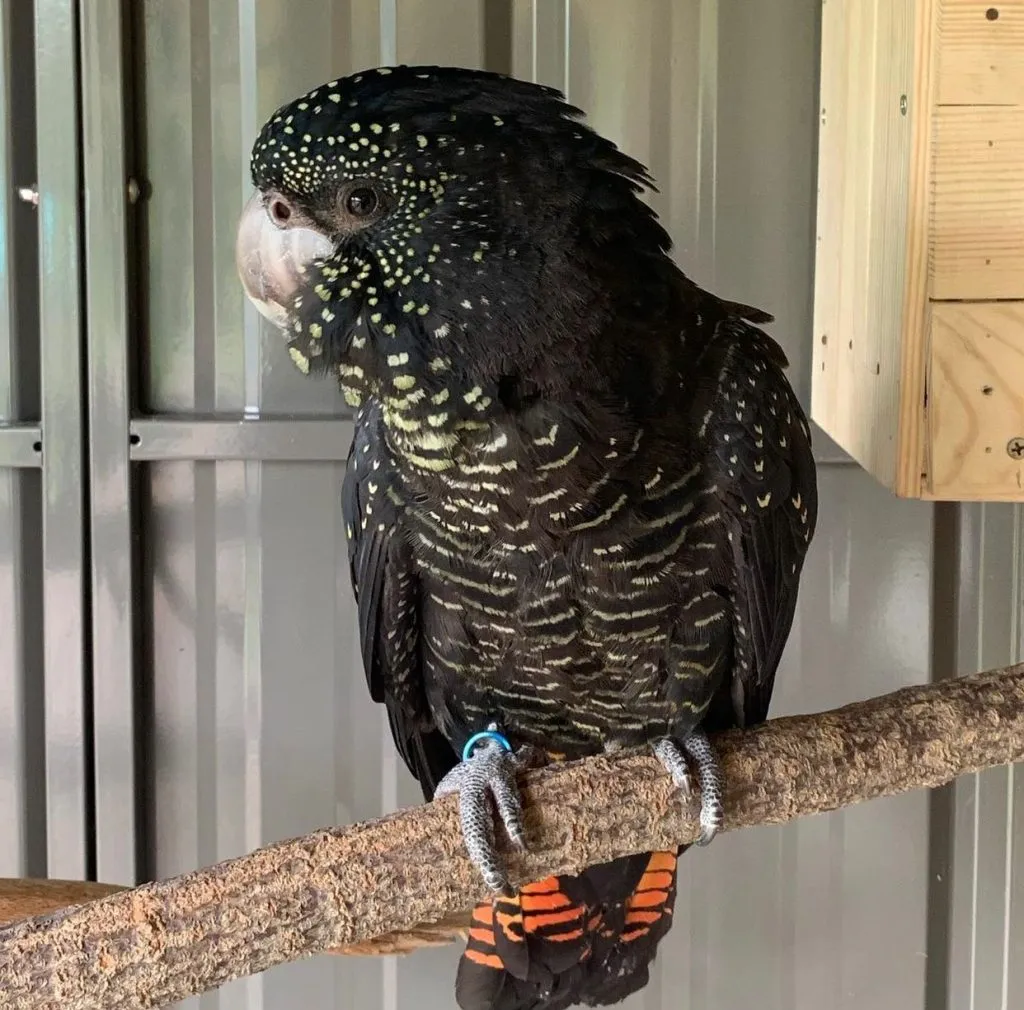
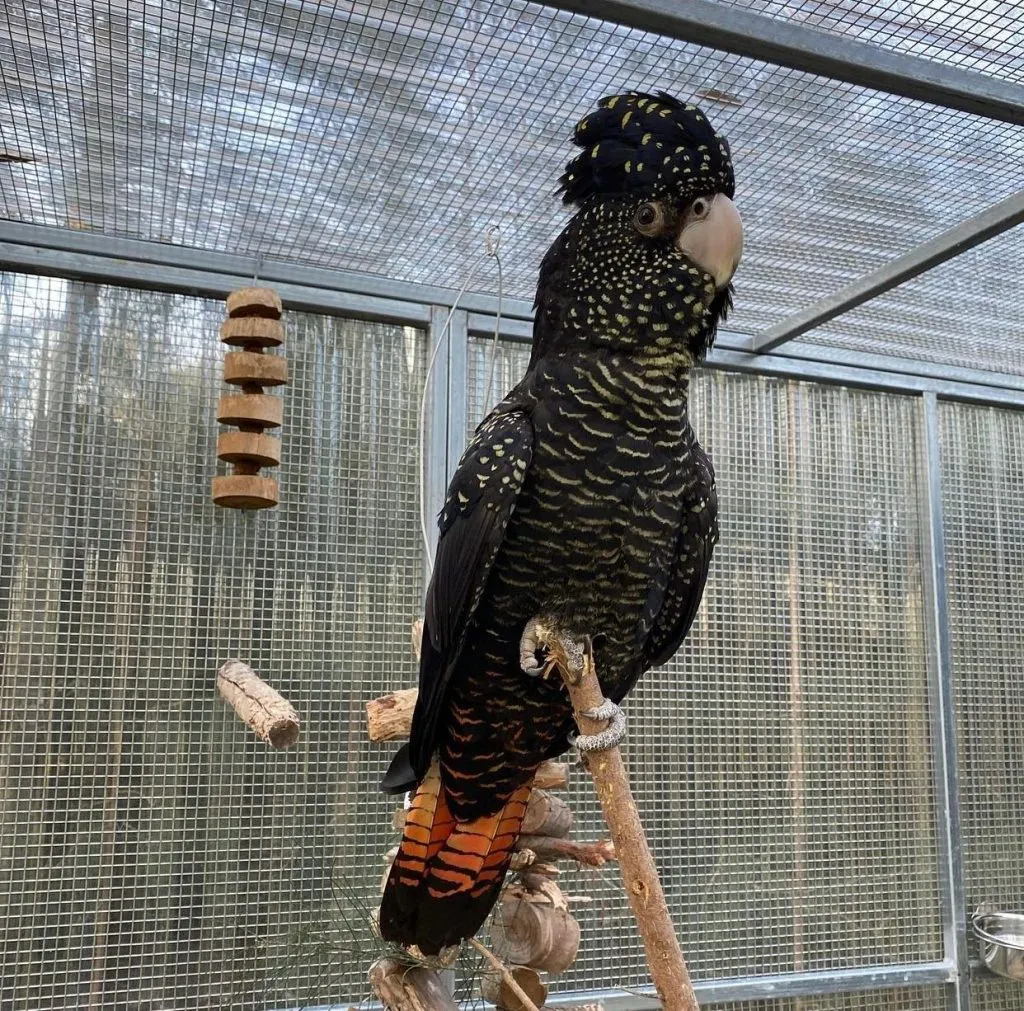
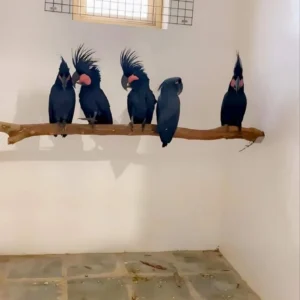
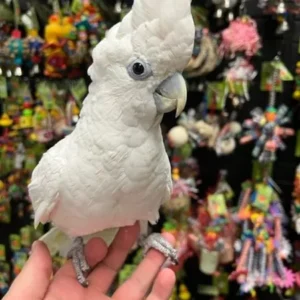
Measuring 22-24 inches (55-61 cm) in length and weighing 2-2.5 pounds (900-1,130 grams), the Red-Tailed Black Cockatoo is a formidable bird with a commanding presence. Its body is covered in glossy black feathers, accented by bright red panels on the tail and subtle yellow cheek patches. The beak is large and powerful, designed for cracking hard-shelled nuts, and the eyes are dark with a bare, pale eye ring. Males and females look similar, though males may have a slightly larger beak. Juveniles have duller colors that intensify with age. This robust build and striking coloration make them visually impressive, often evoking the rugged beauty of the Australian landscape.
Natural Habitat and Behavior in the Wild
In Australia’s eucalyptus woodlands and savannas, Red-Tailed Black Cockatoos dwell in areas with abundant trees for nesting and foraging. They are diurnal and gregarious, forming flocks of 10-50 birds that travel together for safety and food. Their diet includes seeds, nuts, fruits, and insects, with a particular fondness for eucalyptus seeds and Allocasuarina cones. In the wild, they play a crucial role in seed dispersal, aiding in forest regeneration.
Wild behaviors include spectacular aerial displays, loud communal calls that can be heard for miles, and social grooming. They are monogamous, nesting in large tree hollows where females lay 1-2 eggs. Due to habitat loss, competition for nesting sites, and feral predators, Red-Tailed Black Cockatoos are considered vulnerable. Conservation efforts focus on protecting woodlands and reducing threats from introduced species.
Why Choose a Red-Tailed Black Cockatoo as a Pet?
Red-Tailed Black Cockatoos are ideal for owners with space, time, and experience. They offer a unique blend of beauty and personality but require commitment.
- Intelligent and Social: They form strong bonds, enjoy interaction, and can learn tricks or mimic sounds.
- Vocal and Expressive: Their calls are loud and varied, adding a dynamic element to any home.
- Long-Lived Companions: With care, they live 40-60 years, providing enduring companionship.
- Striking Appearance: Their black and red plumage makes them a visual centerpiece.
They need large spaces and mental stimulation to prevent boredom, which can lead to destructive behaviors. They’re best for rural or spacious homes, not apartments.
Setting Up the Perfect Habitat for Your Red-Tailed Black Cockatoo
These birds require expansive environments. A large aviary—at least 6x4x8 feet—is essential.
Cage Essentials
- Perches and Toys: Sturdy, natural wood perches and toys like puzzles, swings, and chewables to keep them engaged.
- Food and Water Dishes: Durable bowls for pellets and fresh water.
- Lighting and Temperature: UVB lighting and 65-80°F (18-27°C).
- Substrate and Cleaning: Paper lining and regular cleaning.
Allow daily supervised out-of-cage time for exercise.
Diet and Nutrition for Red-Tailed Black Cockatoos
A balanced diet supports their health.
Recommended Foods
- Pellets: 60-80% of diet for balance.
- Fresh Produce: Fruits and vegetables daily.
- Seeds and Nuts: Limited treats.
- Supplements: Calcium and proteins.
Feed twice daily with fresh water.
Health and Common Issues
Red-Tailed Black Cockatoos are hardy but need monitoring.
Common Health Concerns
- Feather Plucking: Address with enrichment.
- Respiratory Issues: Avoid drafts.
- Nutritional Deficiencies: Balance diet.
- Parasites: Vet checks.
Annual vet visits are recommended.
Training and Socialization
They respond to positive training.
Basic Training Tips
- Commands: Teach “step up.”
- Tricks: Encourage mimicry.
- Socialization: Gradual introductions.
Build trust through interaction.
Breeding Red-Tailed Black Cockatoos
Breeding requires expertise. Provide nesting boxes. Consult experts.
Conclusion: Embracing the Red-Tailed Black Cockatoo
The Red-Tailed Black Cockatoo is a magnificent bird that brings power and beauty to homes. With its striking plumage, it’s a rewarding pet for dedicated owners. Prioritize care for a happy life. If you’re interested, research and prepare for this impressive parrot.
Reviews
There are no reviews yet.